
VSI Rotor Tips Working Principle
VSI Rotor tips are the primary wear elements in VSI crushers, positioned at the outer edge of the spinning rotor where they serve as the final acceleration surface for feed material. The kinetic energy delivered at these velocities — proportional to half the particle mass times the velocity squared — creates intense wear conditions at the rotor tip position, making it the most demanding wear environment in any comminution equipment. Wear rates can consume several kilograms of material per thousand tonnes processed, depending on the silica content and hardness of the feed. Rotor tip geometry, including face angle, radius, and thickness, directly influences material trajectory, acceleration efficiency, and the distribution of wear across the tip surface.
VSI crushers use high-speed impact to crush rock. Material enters the center of the spinning rotor and is thrown outward by centrifugal force. At the outer edge, VSI Rotor Tips accelerate the material to 60–80 m/s before it hits a rock shelf or anvil. The tips are the final acceleration surface and the main wear part, so their material and attachment directly affect crushing efficiency and uptime.
Quality of Carbide for VSI Rotor Tips
The quality of carbide used in VSI rotor tips is determined by several interrelated parameters: hardness, binder content, grain size, density, and transverse rupture strength. These parameters must be carefully balanced to achieve optimal performance in the specific crushing application.
Hardness
Carbide hardness for VSI rotor tips typically ranges from 86 to 91 HRA (Rockwell A scale), with premium grades reaching 92–94 HRA for abrasion-dominant applications. Higher HRA grades excel in silica sand production, where wear rate drops by 40–60% compared to lower grades. The hardness is primarily controlled by the tungsten carbide grain size and the cobalt binder content — finer grains and lower cobalt content yield higher hardness but reduced toughness.
Cobalt Binder Content
The cobalt binder content typically ranges from 6% to 12% by weight. This range balances hardness and fracture resistance, extending service life to 300–500 hours in medium-abrasion aggregates. Lower cobalt content (6–8%) produces harder, more wear-resistant tips suitable for clean, abrasive feeds, while higher cobalt content (10–12%) provides greater toughness for applications where impact resistance is critical.
Carbide Grain Size
Optimized carbide grain sizes for VSI rotor tips typically range from 2 to 6 microns for maximum abrasion resistance. Fine grains (1–5 microns) maximize hardness and wear resistance, while coarse grains (8–15 microns) enhance toughness. The choice depends on the dominant wear mechanism — abrasion-dominant applications benefit from finer grains, while impact-heavy operations require coarser grains to prevent chipping and fracturing.
Density and Transverse Rupture Strength
High-quality sintered carbide achieves density values of approximately 14.0–14.9 g/cm³, indicating a dense, porosity-free structure. Transverse rupture strength (TRS) values above 2400 N/mm² are typical for premium grades, with high-impact applications requiring TRS above 2500 MPa to avoid catastrophic tip failure.
Quality Assurance Through Manufacturing
The manufacturing process significantly influences carbide quality. Vacuum sintering is crucial for producing uniform, high-density carbide grains with consistent grain size and porosity-free structures. This process fuses carbide particles at high temperatures with uniform heat control, boosting wear, corrosion, and impact resistance essential for VSI environments. In-house control of the full production chain — from raw material preparation through batching, pressing, and sintering — eliminates variability and ensures stable quality.
Fixing Methods
VSI Rotor Tips must stay firmly attached under high centrifugal force, vibration, and repeated impact. Common methods include:
- Adhesive / glue bonding
This is a common fixing method. In Metso Barmac series and Sandvik CV series VSI Crushers, the rotor tips usually use glue to fix the carbide. - Copper brazing
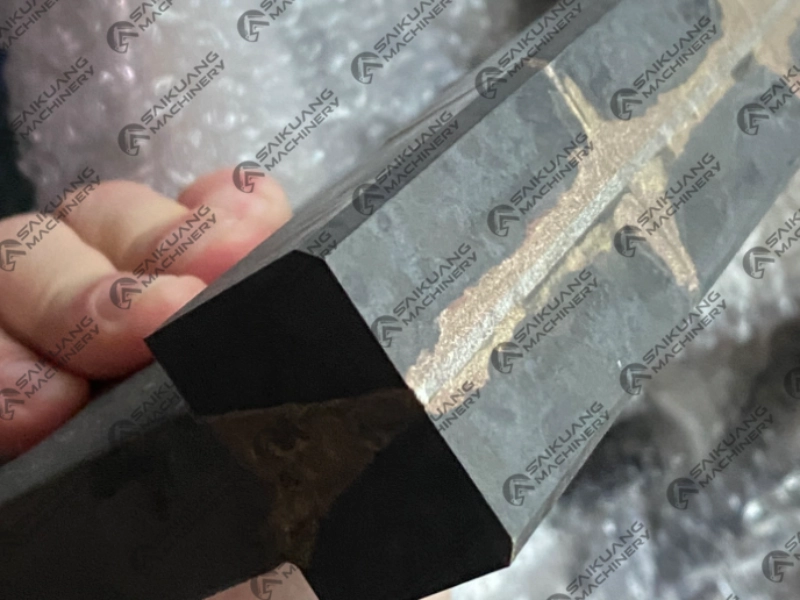
Copper brazing provides a stronger joint. For unsupported structures or special working conditions, copper brazing is often needed to fix the carbide securely and prevent carbide loss or breakage.
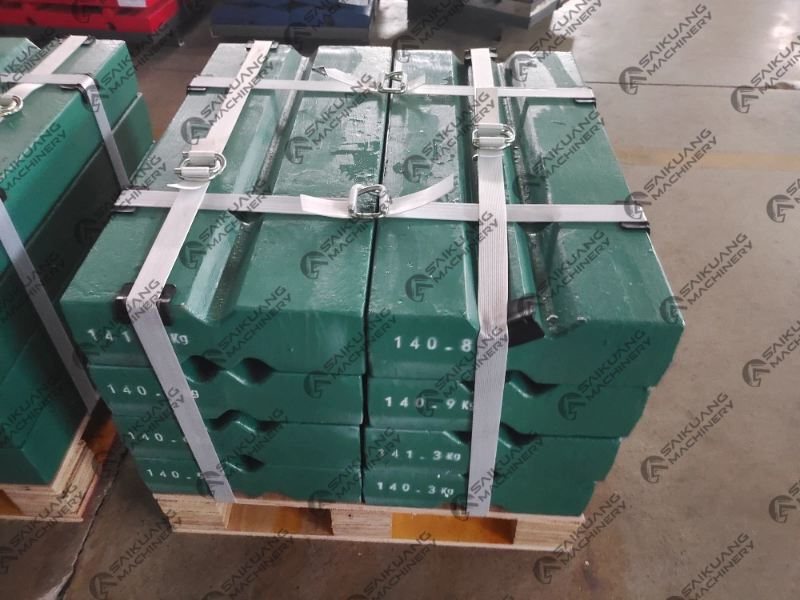
After fixing, tips should be replaced in weight-matched sets to keep the rotor balanced. Worn tips should be changed when the carbide insert is nearly consumed, cracked, or separated from the holder.
Product Advantages & Service
Your Reliable Partner for Crusher Spare Parts
Email: infosk@skpremiumcasting.com
Tel: 0086-17351780508