
How to Get Up to 30% More Life from Cone Crusher Liners
Cone crusher liners are the single largest recurring wear-part cost in most aggregate and mining crushing circuits. A set of manganese liners that reaches its full utilization potential protects not only the maintenance budget but the throughput, product shape, and uptime that justify the crusher’s place in the flow sheet. The gap between a liner set that reaches 35% utilization and one that reaches 55% is not a matter of luck or alloy alone. It is determined by a sequence of decisions that begin before installation and continue through every hour of operation.
Industry field data points to a specific, achievable target: with proper commissioning, disciplined feed control, and correct material selection, producers can boost cone crusher liners lifespan by up to 30% in most applications, excluding those that are highly abrasive by nature. That figure is not a marketing claim. It is the compounded result of several controllable variables, each of which either captures or discards the wear allowance embedded in the liner.
Commission the Liner Correctly: The Work-Hardening Window
Manganese steel is the default material for cone crusher liners because it work-hardens in service: as rock compresses against the new liner surface, the austenitic structure transforms and hardens, taking “green” manganese from approximately 250 Brinell to as high as 660 Brinell. But that transformation does not happen automatically or instantly. A liner that is put into full-load service immediately after installation may never develop the hardened surface layer that delivers its designed wear resistance. The first hours of a liner’s life determine how the rest of its life will unfold.
The commissioning procedure is counterintuitive because it deliberately runs the crusher below full power. After installing a new set of manganese cone crusher liners, operate at 50% of rated power (approximately 65% amps) with a full cavity for about six hours. The crusher is still crushing rock during this period, but it is doing so at a controlled energy input that allows the manganese surface to harden progressively rather than being shocked into premature deformation. After the initial six hours, increase to 75% power (approximately 80% amps) with a full cavity for two hours. At that point, the liner surface should be fully work-hardened, and operation can resume at or near 100% power.
The cost of this commissioning window is eight hours of reduced throughput. The return is a liner surface that has developed its full hardness before it faces full crushing load. Skipping the procedure does not save eight hours; it trades them for weeks of accelerated wear later in the liner cycle.
Choke Feed Is Not a Recommendation—It Is a Requirement
Once cone crusher liners are commissioned, the single most influential operating variable is feed condition. Choke feeding means keeping the crushing chamber full, with the cone head covered by at least 150 mm of consistent, homogenous feed material. This is not simply a throughput practice. It is a liner-life practice. A choke-fed cavity maximizes rock-on-rock (multi-layer) crushing, which distributes wear across the mantle and bowl liner surfaces rather than concentrating it at the point where single-layer crushing occurs.
The alternative is costly. Running a cone crusher empty or with erratic surges causes the head to oscillate at 200–300 rpm, generating inertia and momentum that accelerates liner wear and risks component damage. Each empty-chamber cycle exposes the liner to direct metal-to-rock impact at the point of minimum coverage, and each surge delivers an uneven load that wears one sector of the chamber faster than the rest. The practical rule is straightforward: never feed a cone crusher on and off throughout a shift. Supply a continuous, even material load, supported by surge bins and variable-speed feeders that maintain a stable level in the feed hopper.
Distribute the Feed 360° Around the Chamber
Choke feeding alone does not guarantee even liner wear. The feed must also be non-segregated and distributed evenly around the full circumference of the crushing chamber. Segregation—coarse material entering one side of the cavity while fines enter the other—is a leading cause of premature cone crusher liners failure because it imposes asymmetric loads through every gyrating cycle and wears one sector of the liner ahead of the rest.
The consequence of segregation is measurable. Uneven feed distribution produces power and force cycles that vary around the chamber, and the liner sector receiving the coarser, harder load reaches its wear limit while the opposite sector still has usable thickness. The liner set is then replaced on the basis of its worst-worn sector, discarding the remaining wear allowance on the lightly loaded side. Feed distribution devices—a static three-way distributor, a splitter, or a rotating feed distributor—correct this by presenting a homogenous feed profile to the chamber. Even a feed box arranged to avoid discharge onto a single side can meaningfully reduce sector-level wear disparity. The investment in distribution hardware is repaid not by a single liner set but by every set that follows.
Match the Alloy to the Wear Mechanism, Not to the Part Number
Manganese grades are not interchangeable. The selection of alloy determines the ceiling on achievable cone crusher liners life, and a premium grade applied to a duty that does not require it is as wasteful as a standard grade applied to a duty that exceeds its capability.
Mn18Cr2 is the established baseline for river gravel, granite, and general quarry duty. Its stabilized austenite hardens to above 500 HBW under load and delivers a balanced combination of wear resistance and impact toughness. Mn22Cr2 raises the manganese content to delay the spalling effect—the peeling of the hardened surface layer—that limits Mn18Cr2 in highly abrasive rock. In granite and similar abrasive feed, Mn22Cr2 has demonstrated 35% higher life than the industry average, and field comparisons place its advantage at 30% or more over standard grades in abrasive applications. Ceramic composite liners can extend life further in extremely severe conditions, but their cost premium must be justified by a feed that genuinely consumes manganese at an accelerated rate.
The decision framework is not “which alloy lasts longest,” but “which alloy delivers the lowest cost per ton for this feed.” A Mn22Cr2 set that costs more per kilogram but delivers 30% more life than Mn18Cr2 in abrasive rock can lower cost per ton even at a higher unit price. The same Mn22Cr2 set in a low-abrasion limestone application may deliver no measurable advantage over Mn18Cr2, because the wear mechanism is not severe enough to activate the premium grade’s benefit. Matching the alloy to the actual abrasiveness and impact severity of the feed is one of the most direct levers for extending effective cone crusher liners life without changing anything else in the circuit.
Treat CSS and Cavity Selection as Liner-Life Variables
Closed-side setting and cavity profile are often managed for product gradation alone, but they are equally consequential for cone crusher liners wear. A CSS that is too tight for the feed gradation forces repeated compression of material that is already near product size, concentrating wear at the lower portion of the chamber and reducing the effective life of the liner’s working zone. A nip angle that is too large causes feed to slip upward rather than be crushed, producing bouncing or boiling in the cavity and accelerating wear without productive reduction.
The corrective action is not to open the CSS arbitrarily, but to align the CSS and cavity selection with the feed gradation and the target reduction ratio. Operations that calibrate CSS dynamically against liner wear—rather than setting it once and allowing it to drift as the liner wears—have reported 15–30% lower liner consumption alongside more consistent product size. This is not a marginal adjustment. It is a direct reduction in the rate at which the liner’s wear allowance is consumed per ton produced.
Measure Utilization and Replace on Condition, Not on Calendar
The final 30% of cone crusher liners life is often lost not in the crushing chamber but in the maintenance decision. A liner set that is replaced on a calendar interval, or at the first visible sign of wear, may be discarded with a substantial portion of its usable wear allowance remaining. The industry benchmark for effective utilization is 50–55% of installed liner weight: the worn liner should weigh no more than approximately half of its original installed weight at the point of replacement. A set discarded at 65% of original weight has already surrendered a meaningful fraction of the life it was purchased to deliver.
Condition-based replacement requires measurement, not estimation. Establish fixed reference points on the mantle and bowl liner at installation, record profile readings at each inspection, and track the trend rather than a single data point. A wear profile that is progressing steadily and evenly supports continued operation; a profile that is accelerating in one zone, or showing a step change between inspections, signals that the liner has entered a different wear regime and warrants closer evaluation. Coupling this measurement discipline with throughput tracking—tons produced per liner set, and any decline in throughput at unchanged CSS—converts the replacement decision from a judgment call into a scheduled maintenance event driven by data.
The 30% Is Compounded, Not Guaranteed
No single intervention delivers 30% more life from cone crusher liners in isolation. The figure represents the cumulative effect of commissioning correctly, feeding consistently, distributing evenly, selecting the alloy against the actual wear mechanism, managing CSS as a wear variable, and replacing on measured condition rather than on habit. An operation that adopts only the work-hardening procedure may capture a portion of the available gain. An operation that combines work-hardening with choke feeding and feed distribution captures more. The full envelope requires all of these practices to be treated as a system, because they interact: a correctly hardened liner still wears unevenly if the feed is segregated; a perfectly distributed feed still accelerates wear if the CSS is mismatched to the gradation; and a well-matched alloy still surrenders its advantage if the liner is discarded at 65% utilization.
The practical starting point is not a capital project. It is the next liner change. Record the installed weight, follow the eight-hour commissioning sequence, verify that the chamber is choke-fed and the feed is not segregating, and measure the worn weight at changeout. The difference between that number and the previous changeout is the first real measurement of how much cone crusher liners life the operation is capturing—and how much remains available.
Why Choose Saikuang for Cone Crusher Liners
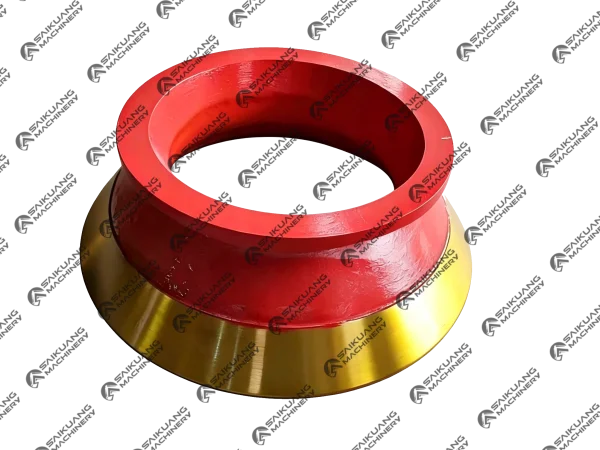
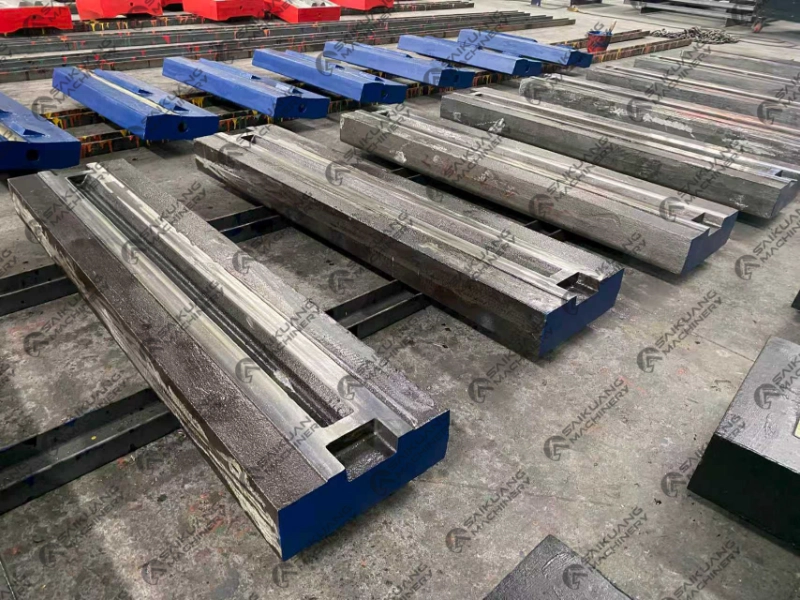
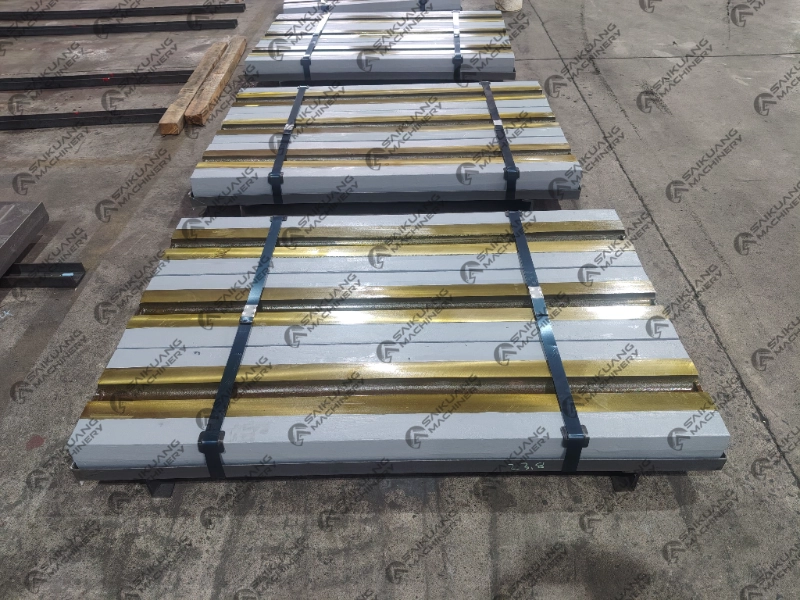
The practices described above—correct commissioning, choke feeding, even distribution, alloy matching, CSS management, and condition-based replacement—deliver their full benefit only when the cone crusher liners themselves are manufactured to consistent dimensional and metallurgical standards. Saikuang supplies cone crusher liners as a manufacturing partner rather than a catalogue reseller, and that distinction matters at every point in the liner life cycle.
Application-matched alloy selection. Saikuang produces cone crusher liners in Mn18Cr2, Mn22Cr2, and ceramic-reinforced grades, and recommends the grade against the actual feed abrasiveness and impact severity rather than defaulting to a single “standard” manganese. For abrasive granite and basalt duty, the Mn22Cr2 option is available specifically to capture the 30%+ life advantage described above; for low-abrasion feed, the standard grade avoids unnecessary cost premium.
Dimensional consistency across the set. A liner set that does not seat correctly against the bowl and head introduces the very load concentration and uneven wear that the operating practices in this article are designed to prevent. Saikuang cone crusher liners are produced to OEM-equivalent profiles with controlled wall-thickness distribution, so the chamber geometry after installation matches the design intent and the wear allowance is distributed as specified.
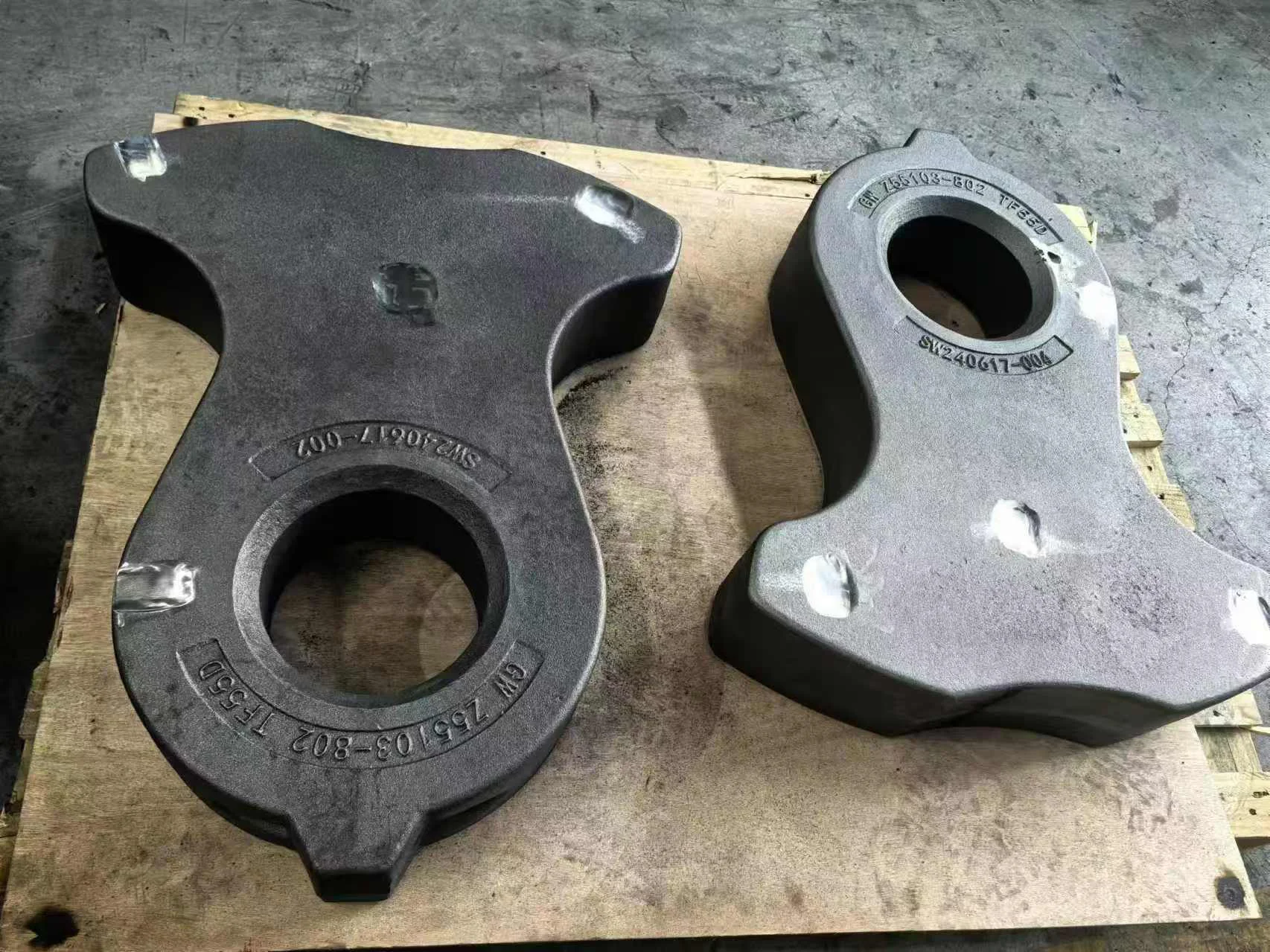
Full wear-circuit coverage. Beyond the mantle and bowl liner, Saikuang supplies the supporting wear components in the cone crusher chamber—torch ring, feed cone, socket liner, and locking nut—against the same dimensional reference. Sourcing the full set from one manufacturer simplifies fit verification and reduces the risk of mismatched interfaces between mating parts.
Measured, not claimed, performance. Saikuang works with customers to track installed weight, worn weight at changeout, and tons produced per liner set, so the utilization target described in this article can be verified against actual field data rather than assumed. That feedback loop also informs the next alloy recommendation, turning each liner change into an input for the next selection decision.
Responsive technical support and quotation. To select the correct cone crusher liners for your crusher model and feed conditions, send Saikuang the crusher model, feed material and abrasiveness, target CSS, and current liner life in hours or tons. Our team will match the alloy and profile to the duty and provide a quotation with lead time.
Email: infosk@skpremiumcasting.com
Tel: 0086-17351780508