
What “Ceramic-Composite” Actually Means
A ceramic-composite crusher wear part is a metal-matrix composite (MMC). The structure is a metallic body—manganese steel, martensitic steel, or chrome iron—with ceramic inserts or ceramic particles placed at the wear zone. Common ceramic phases include ZTA (zirconia-toughened alumina), alumina, and titanium carbide (TiC), with hardness values roughly an order of magnitude above the surrounding steel: ZTA inserts around 1400–1600 HV, TiC inserts in the 2800–3200 HV range.
The design logic is zone separation. The ceramic handles the sliding and gouging abrasion that removes metal from the wear face. The metal matrix handles the impact load and holds the ceramic in place. A TiC-insert cone liner, for example, behaves like tough steel in impact zones and like a very hard material in sliding and gouging zones.
That design logic only works if the metal matrix can do its half of the job. The ceramic is not toughened by the matrix; it is protected by it. Once the impact energy or the point loading exceeds what the matrix can distribute, the ceramic becomes the failure path.
The Trade-Off That Defines the Category
The fundamental constraint of ceramic-composite wear parts is the same one that governs every crusher wear alloy, amplified: toughness and hardness are inversely related.
Manganese steel sits at the toughness end. It starts soft—around 200–240 HB—and work-hardens under impact to roughly 500 HB, while the body stays ductile enough to absorb shock without fracturing. Its weakness is abrasion resistance in low-impact duty, where it never hardens enough to resist sliding wear.
Ceramic composites sit at the hardness end. The ceramic phase resists abrasion at a level plain steel cannot match, but the composite as a whole inherits the ceramic‘s sensitivity to flaws and point loading. The technical literature on ceramic composites is blunt about the mechanism: low intrinsic toughness leads to edge chipping, microcrack propagation, and premature failure when the material is subjected to loads it was not designed to tolerate.
The practical consequence is that ceramic composites are not a “better alloy” in the way that Mn22 is a better alloy than Mn13 for abrasive rock. They are a different operating regime—one that requires controlled impact, controlled feed size, and controlled tramp-metal exposure. Break any of those controls, and the composite fails by a mechanism that plain manganese would have survived.
Where Ceramic-Composite Wear Parts Pay Off
The pay-off zone is consistent across blow bars, cone liners, jaw plates, and hammers: high abrasion, low-to-moderate impact, tight feed control. Within that zone, the ceramic phase does what it was designed to do, and the cost-per-ton case is strong.
Controlled-feed secondary and tertiary crushing
In secondary and tertiary positions where the top size is already reduced and the feed is clean, impact energy per blow is manageable and the wear mechanism shifts toward abrasion. This is the native application for ceramic-reinforced grades.
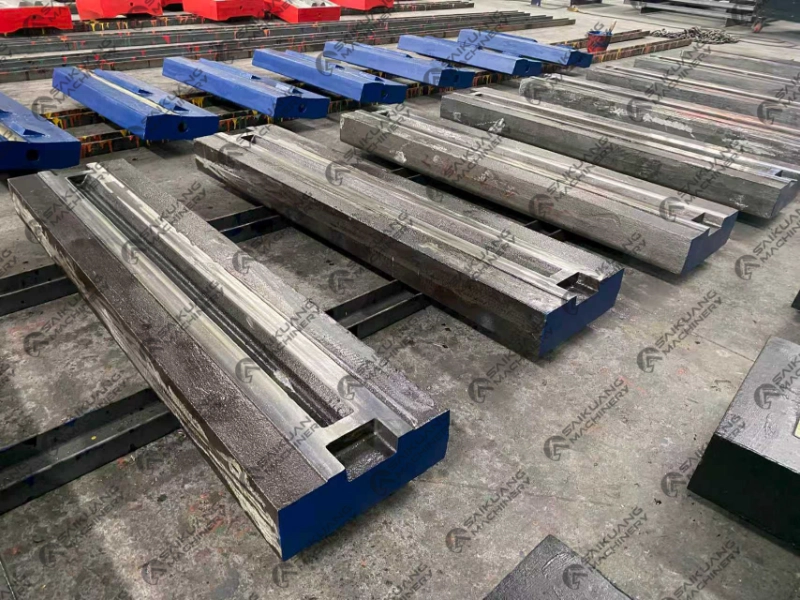
For horizontal shaft impactors, martensitic-ceramic blow bars are specified for building rubble, recycling, asphalt, and natural stone where the material is medium to highly abrasive, but explicitly not suitable for very large feed sizes. High-chrome-ceramic bars are positioned for secondary, tertiary, and asphalt duty where feed size must be controlled and the bars will not tolerate large feed.
The same logic applies in cone crushers. TiC-insert cone liners are recommended for “sustained high abrasion on controlled feed,” while standard manganese remains the better fit for mixed impact and variable feed.
High-silica feeds where chrome washes out
Silica content is the trigger condition that most reliably justifies the ceramic upgrade. When silica exceeds roughly 15%, standard chrome wears rapidly, and ceramic reinforcement becomes the application where the premium is recovered. Field data for ceramic-insert blow bars in highly abrasive duty show service life typically increasing 150–200%, with replacements moving from every 300 hours to 750–900+ hours.
Applications with a demonstrated cost-per-ton gap
The economic case is strongest where the feed is abrasive enough that the life multiplier is large and the downtime avoided is expensive. Reported data for ceramic-insert blow bars in suitable applications show 25–40% lower cost per ton compared with standard alloys. In one comparison, standard high chrome delivered 300-400 hours , while ceramic-insert bars delivered 750-1,000+ hours.
A representative field-data set for blow bars makes the zone explicit:
| Application | Ceramic grade | Hours | Tonnage | Key condition |
| M-sand (high silica) | HC + Ceramic Plus | 1,500–2,400 | 150K–300K | Pre-screen fines; clean feed |
| Asphalt recycling | Martensitic + Ceramic | 1,000–1,800 | 100K–220K | Overband magnet; centered feed |
| Limestone (clean) | HC + Ceramic | 1,500–3,000 | 200K–400K | Grizzly screen; tight settings |
| Basalt (secondary) | HC + Ceramic Plus | 1,200–2,200 | 150K–280K | Clean feed; lower RPM |
The pattern in that table is not subtle. Every high-life result carries a feed-control condition: pre-screening, overband magnet, grizzly, tight settings, lower RPM. The ceramic is earning its life inside those controls.
The Operating Conditions That Decide the Outcome
Ceramic-composite performance is not a property of the part alone. Three operating variables can move a part from the pay-off zone into the failure zone without any change to the casting.
Feed-top-size discipline is the first control. Pre-screening and a defined maximum feed size keep impact energy inside the range the composite was designed for. A chamber that occasionally receives oversize is a chamber that will eventually break a ceramic bar.
Tramp-metal removal is the second control. An overband magnet is not a formality in a ceramic-composite circuit; it is the protection that prevents the brittle-failure mode. Where tramp metal cannot be excluded, the material selection should move toward manganese or a toughened grade, not toward a harder ceramic.
Wear-profile monitoring and turn scheduling is the third control. Ceramic inserts maintain the wear profile longer than monolithic alloys, which keeps the crusher setting tighter and reduces recirculating load. That advantage depends on turning bars or inspecting liners on a schedule that catches edge damage before it propagates. A chipped insert that is caught at inspection is a maintenance event; the same chip that runs to failure is a rotor event.
A Selection Checklist
Ceramic-composite wear parts are a targeted tool, not a default upgrade. The selection sequence that keeps them in the pay-off zone is:
-
Identify the crushing stage. Primary positions with large feed belong to manganese. Ceramic composites are secondary and tertiary tools.
-
Measure the silica content. Above roughly 15% SiO₂, the abrasion case for ceramic strengthens; below it, the life multiplier may not clear the price premium.
-
Confirm feed control. Pre-screening, controlled top size, and tramp-metal removal are prerequisites, not optional improvements.
-
Calculate cost per ton on your feed, not the catalog multiplier. Use part price plus downtime, divided by measured tons to change-out. A 1.5–2× price premium needs a demonstrated life gain to justify it.
-
Match the ceramic grade to the impact energy. Martensitic-ceramic tolerates medium impact; high-chrome-ceramic is for ultra-clean, low-impact duty. Do not put the most brittle grade in the most variable chamber.
The plants that get the most from ceramic composites are not the ones that bought the hardest part. They are the ones that built the feed-control discipline the part requires—and then measured the result in cost per ton rather than in hours of advertised life.
Saikuang: Ceramic-Composite Wear Parts Matched to the Application
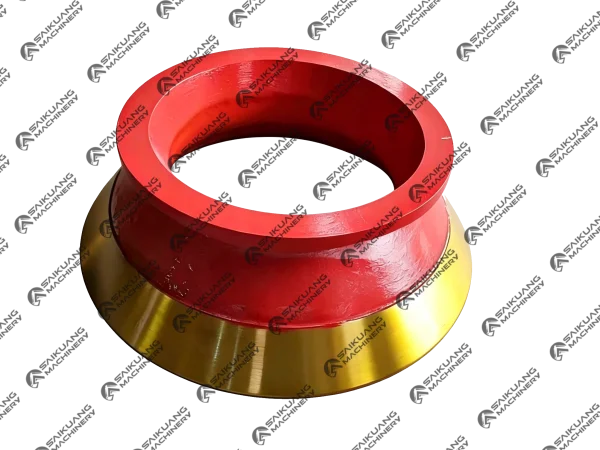
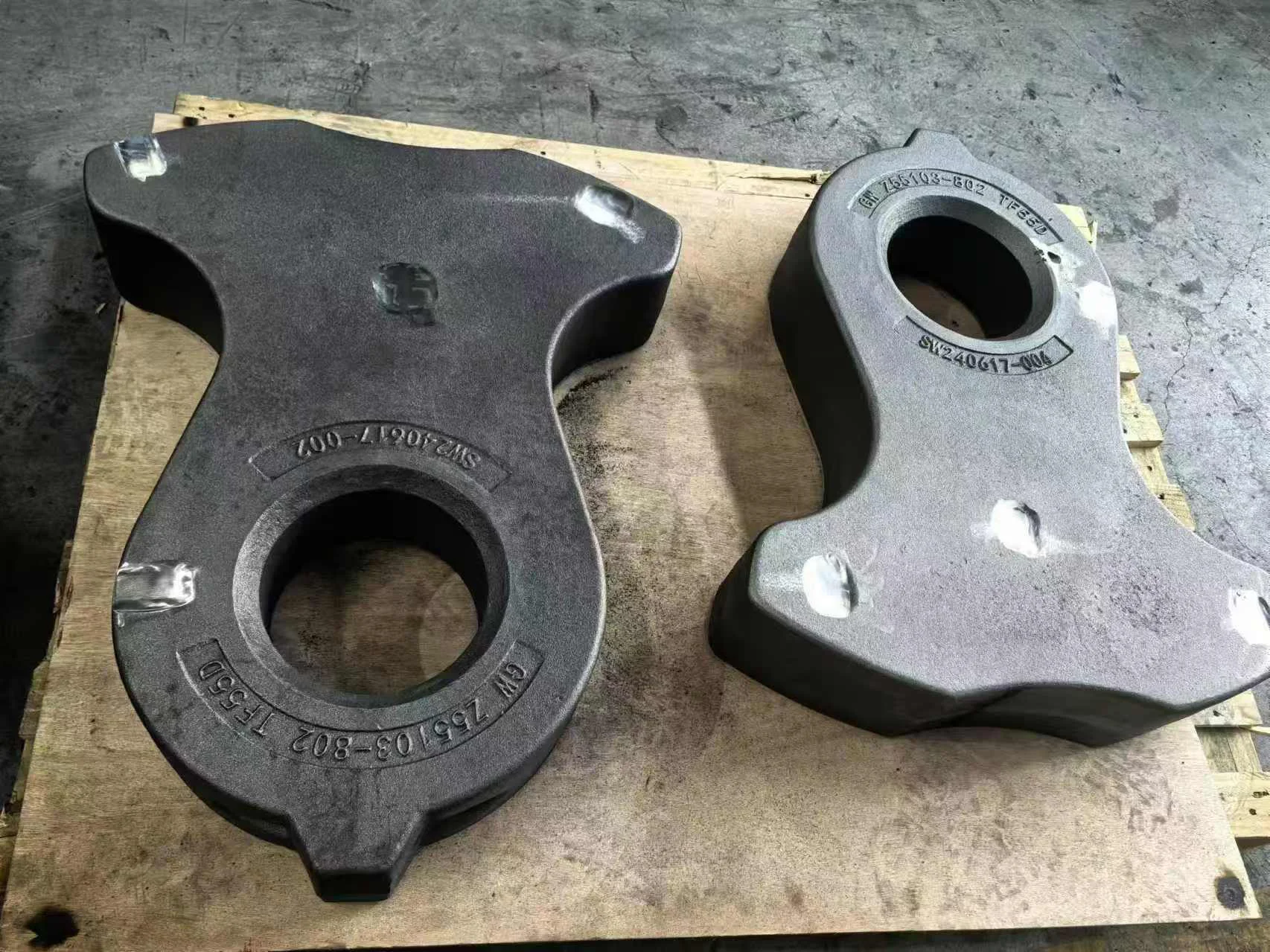
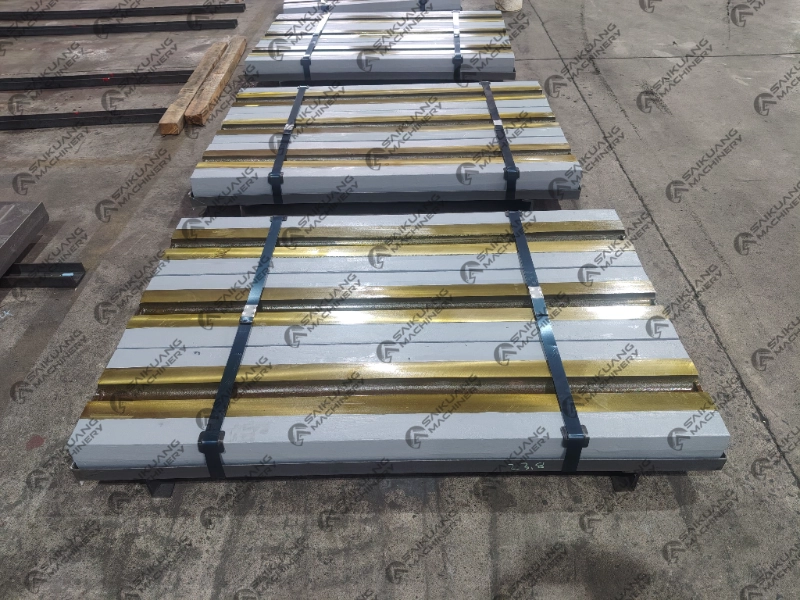
Saikuang Casting produces ceramic-composite and MMC wear parts across the crusher wear spectrum—blow bars, jaw plates, cone liners (mantle and bowl liner), and hammers—in manganese-matrix and chrome-matrix composite configurations.
Its product range also covers conventional manganese, martensitic, and high-chrome grades. This means a ceramic-composite upgrade can be evaluated against the baseline alloy from the same supplier.
Application-first grade selection.
Saikuang’s blow-bar selection guide is organized around the variables that determine success in service: feed abrasiveness, feed size, tramp-iron risk, and impact energy. It is not built around a single promoted grade.
This matters because ceramic composites are not a default upgrade. They are a targeted tool that only pays off inside specific operating conditions.
The grade can be matched to the chamber, not the other way around.
Saikuang’s range spans the toughness-to-hardness spectrum. A primary position with tramp-metal risk can be supplied in manganese or TiC-reinforced manganese. A clean secondary abrasive duty can be supplied in ceramic-reinforced martensitic or chrome.
The failure mode can be discussed before the order.
A supplier that understands the spalling and delamination mechanism can flag a misapplication at quotation stage rather than after the first bar breaks. That conversation is worth more than a catalog page.
The composite can be supplied alongside the conventional baseline.
For plants running a two-tier strategy—ceramic composite in the high-wear position, conventional alloy elsewhere—Saikuang’s product breadth allows the comparison trial and the production order to come from one qualified source.
Saikuang is an independent aftermarket manufacturer. Its parts are manufactured and warranted under its own quality system and are not manufactured for, purchased from, or warranted by the original equipment manufacturers.
Your Reliable Partner for Crusher Spare Parts
Email: infosk@skpremiumcasting.com
Tel: 0086-17351780508