
The aggregates, mining, and recycling industries operate under grueling conditions where equipment is constantly pushed to its limits. At the heart of horizontal shaft impact (HSI) crushers are the blow bars—critical components responsible for striking feed material with immense kinetic energy to fracture and reduce it. However, processing highly abrasive materials inevitably leads to rapid wear and tear. Finding the balance between impact resistance and abrasion resistance has historically been the primary challenge for plant operators.
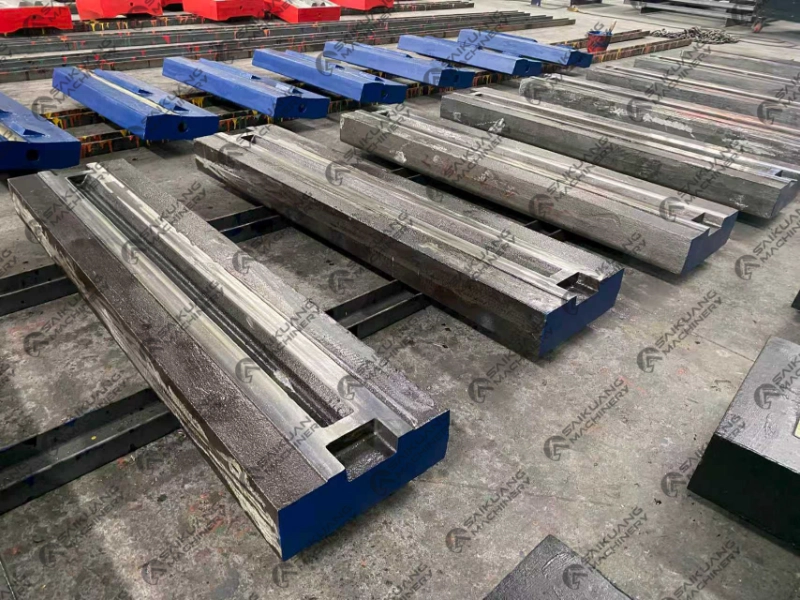
In recent years, the introduction of metal matrix composites (MMC) has revolutionized crusher wear parts. Among these innovations, ceramic blow bars have emerged as the premier choice for tackling extreme abrasion while maintaining structural integrity. By combining the toughness of steel alloys with the unparalleled hardness of ceramics, these advanced components offer high-wear solutions that significantly extend maintenance intervals.
This comprehensive guide explores the engineering behind ceramic blow bars, their operational advantages, ideal applications, and how they contribute to a longer service life and optimized total cost of ownership (TCO) for crushing plants.
The Mechanics of Horizontal Shaft Impact Crushers
To understand the value of advanced blow bars, it is essential to first understand the environment in which they operate. In an HSI crusher, material enters the crushing chamber and drops onto a spinning rotor equipped with blow bars. The blow bars strike the material, shattering it upon impact and propelling it against the impact aprons (breaker plates) for further reduction.
This process subjects the blow bars to two distinct destructive forces:
- High Impact: The sheer force of striking large, heavy feed material, which can cause brittle materials to fracture or shatter.
- Severe Abrasion: The continuous sliding and grinding of abrasive rock, concrete, or asphalt against the face of the blow bar, which gradually wears away the metal.
Traditionally, operators had to compromise. Manganese steel offers excellent impact resistance but wears quickly in abrasive applications. High-chrome iron provides excellent abrasion resistance but is brittle and prone to catastrophic failure if large, uncrushable materials (like tramp metal) enter the chamber.
The Science of Ceramic Blow Bars
Ceramic blow bars eliminate the traditional compromise by utilizing a composite structure. They are not made entirely of ceramic, as that would be far too brittle to survive the impact forces of a crusher. Instead, they are engineered using a Metal Matrix Composite (MMC) design.
How They Are Manufactured
The manufacturing process involves placing a porous, honeycomb-like preform made of high-hardness ceramic particles (typically alumina or zirconia oxide) into a mold. Liquid metal—usually martensitic steel or high-chrome iron—is then poured into the mold. The molten alloy infiltrates the porous ceramic matrix.
Once cooled and solidified, the resulting blow bar features a wear face fortified with extreme hardness, while the body and backing of the bar retain the ductility and impact absorption properties of the base alloy.
Base Alloy Options
- High-Chrome with Ceramic Inserts: Best suited for highly abrasive environments with smaller feed sizes and minimal risk of tramp metal.
- Martensitic Steel with Ceramic Inserts: Offers superior impact resistance, making it ideal for primary and secondary crushing where feed sizes are larger, and occasional tramp iron might be present.
Key Operational Advantages
Investing in ceramic-reinforced crusher wear parts transforms plant efficiency and profitability in several measurable ways.
1. Exponentially Longer Service Life
The most immediate benefit is the dramatic increase in wear life. Depending on the application, ceramic blow bars can last anywhere from 2 to 4 times longer than standard mono-alloy bars. The ceramic inserts possess a hardness that far exceeds that of the silica or quartz found in abrasive feed materials, drastically slowing down the rate of abrasive wear.
2. Consistent Production Quality and Throughput
As standard blow bars wear down, their profile changes. A rounded, worn blow bar loses its ability to grab and strike material effectively, leading to a decrease in throughput and a change in the product gradation (often resulting in more oversized material). Because the ceramic matrix resists wear so effectively, the blow bar maintains its original profile for a much longer period, ensuring consistent material reduction and high-quality cubical product yield.
3. Reduced Maintenance Downtime
Crusher maintenance is dangerous, labor-intensive, and costly. Every time a plant must shut down to flip or replace blow bars, it loses valuable production hours. By extending the wear life, operations can align blow bar replacements with scheduled plant maintenance rather than suffering unexpected mid-shift shutdowns.
4. Lower Cost Per Ton
While the initial purchase price of composite blow bars is higher than traditional manganese or chrome alternatives, the true metric of success is the cost per ton of material produced. When factoring in the extended lifespan, reduced labor costs, and increased uptime, the total cost of ownership is substantially lower.
Comparative Analysis of Blow Bar Materials

To properly select the right wear part, operators must evaluate the specific demands of their feed material. The following table provides a concise comparison of standard blow bar materials against ceramic composites.
| Material Type | Impact Resistance | Abrasion Resistance | Ideal Application | Relative Lifespan* |
|---|---|---|---|---|
| Manganese Steel | Excellent | Poor | Primary crushing, large feed, high tramp iron risk. | 1x (Baseline) |
| Martensitic Steel | Good | Moderate | Primary/Secondary crushing, varied feed. | 1.5x |
| High-Chrome Iron | Poor | Excellent | Secondary/Tertiary crushing, highly abrasive, no tramp iron. | 2x |
| Martensitic + Ceramic | Good | Very Good | Concrete recycling, primary crushing of abrasive rock. | 3x – 4x |
| Chrome + Ceramic | Poor to Moderate | Outstanding | Asphalt recycling, secondary crushing of highly abrasive stone. | 4x – 6x |
*Relative lifespan is an estimate based on industry averages; actual results vary based on specific operational parameters.
Ideal Applications for Ceramic Matrix Blow Bars
While advantageous, these specialized components are not strictly necessary for every crushing application (such as crushing soft limestone). They deliver the highest return on investment in the following scenarios:
Asphalt and Concrete Recycling
Recycling applications are notoriously tough on wear parts. Concrete often contains rebar and steel wire, while asphalt is highly abrasive. A martensitic ceramic blow bar provides the toughness needed to handle occasional steel contaminants while offering the hardness required to withstand the abrasive nature of crushed concrete and asphalt millings.
Highly Abrasive Aggregate Production
When processing river gravel, basalt, granite, or quartzite, standard high-chrome bars wear out rapidly. The silica content in these rocks acts like sandpaper against the rotor. Ceramic-inserted high-chrome bars are the ultimate solution here, easily slicing through abrasive rock while protecting the base metal from rapid degradation.
Secondary and Tertiary Crushing
In secondary and tertiary stages, the feed size is already reduced, meaning the impact forces are lower, but the volume of material sliding across the blow bar is immense. This high-abrasion, lower-impact environment is the perfect habitat for ceramic inserts to maximize their lifespan.
Best Practices for Maximizing Blow Bar Life
To extract the maximum value from your high-wear solutions, proper operational and maintenance practices must be strictly adhered to.
- Optimize Rotor Speed: Running the rotor at speeds higher than necessary accelerates wear exponentially. Adjust the rotor RPM to the lowest speed that still achieves the desired product gradation.
- Implement Proper Feed Control: Ensure the crusher is choke-fed evenly across the entire width of the rotor. Uneven feeding leads to localized wear on the center or edges of the blow bars, requiring premature replacement even if the rest of the bar is in good condition.
- Timely Flipping: Blow bars should be flipped before wear encroaches on the rotor body. Because composite bars maintain their profile longer, operators must establish a new, longer interval schedule for inspections to ensure they do not accidentally wear into the rotor backing.
- Tramp Metal Prevention: Regardless of the alloy, uncrushable tramp metal is the enemy of impact crushers. Maintain high-quality overband magnets and metal detectors on the feed belt to protect the ceramic inserts from catastrophic impact failure.
Conclusion
As material processing industries face tighter margins and higher production demands, optimizing equipment uptime is no longer optional—it is a necessity. Ceramic blow bars represent a significant leap forward in metallurgy and materials science. By strategically combining the resilience of steel alloys with the impenetrable hardness of ceramic grids, manufacturers have provided operators with a highly effective tool to combat extreme abrasion. While the initial capital outlay is higher, the resulting longer service life, improved product consistency, and drastic reduction in maintenance downtime make ceramic composite blow bars an indispensable asset for modern, high-efficiency crushing operations.
FAQs
1. Can ceramic blow bars handle tramp iron or uncrushable materials?
While ceramic blow bars with a martensitic steel matrix have better impact resistance than high-chrome bars, they are still more susceptible to fracture than pure manganese steel. Heavy tramp iron can crack the ceramic inserts. It is highly recommended to use effective metal detectors and cross-belt magnets to remove tramp metal before it enters the crusher chamber.
2. Are ceramic blow bars suitable for primary crushing applications?
Yes, but material selection is critical. For primary crushing where feed sizes are large and impact forces are high, a martensitic steel body with ceramic inserts should be used. High-chrome ceramic bars are too brittle for primary crushing and should be reserved exclusively for secondary or tertiary applications with smaller feed sizes.
3. How do I know when it is time to flip or replace a ceramic blow bar?
Like standard blow bars, they should be flipped when the wear edge approaches the rotor body to prevent expensive damage to the rotor itself. Because ceramic maintains a sharper profile for longer, you cannot rely solely on the “rounded edge” visual cue. Regular physical inspections and measurements against the manufacturer’s wear limits are required to determine the optimal flipping and replacement times.