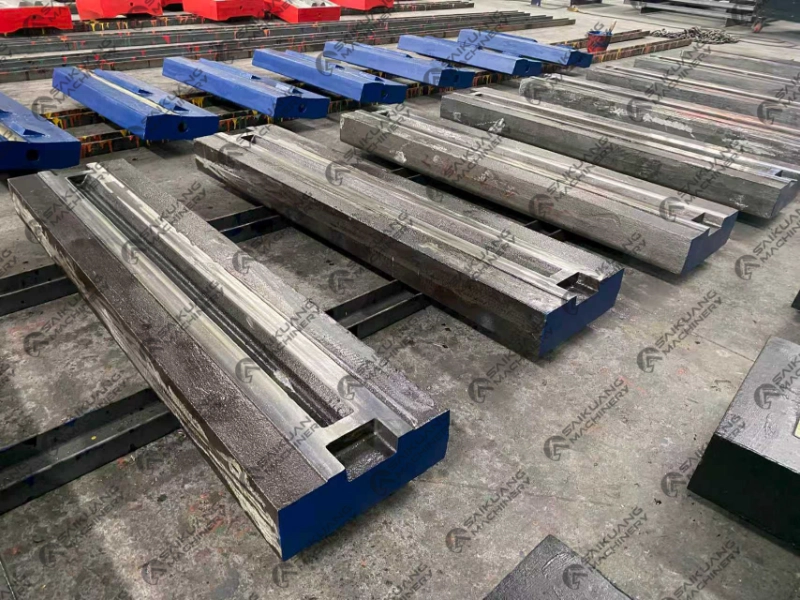

In the highly demanding world of material processing, the efficiency of a Horizontal Shaft Impactor (HSI) relies heavily on the quality and configuration of its internal wear parts. At the heart of this kinetic crushing process lies the crusher blow bar. Serving as the primary point of contact between the machine and the feed material, these heavy metallic blocks dictate the throughput, energy consumption, and overall profitability of the crushing operation.
Understanding the distinct types, metallurgical compositions, and specific applications of crusher blow bars is crucial for plant managers, quarry operators, and recycling facilities. This comprehensive guide delves into the technical nuances of these vital components, providing a robust framework for selecting the optimal wear parts for your specific operational parameters.
1. The Mechanics of Impact Crushing
Before exploring the variations in wear parts, it is essential to understand their role within the HSI crusher. Unlike compression crushers (such as jaw or cone crushers) that crush rock between two hard surfaces, impact crushers utilize kinetic energy to shatter the feed material.
The process begins when material enters the crushing chamber. A heavy-duty rotor, spinning at high speeds, is equipped with multiple blow bars (usually three to four, depending on the rotor design). These bars strike the falling material with tremendous force, propelling it against stationary breaker plates (or aprons) lining the crusher housing. The material fractures along its natural cleavage lines upon impact, drops back down toward the rotor, and is struck again until it is small enough to pass through the discharge gap.
The blow bar absorbs the brunt of this kinetic energy transfer. Consequently, it must possess a delicate balance of hardness (to resist abrasion) and toughness (to withstand severe impact without fracturing).
2. Types of Crusher Blow Bars by Design
While the metallurgical composition is the primary differentiator, the physical design and profile of the blow bar also influence its performance, penetration into the feed material, and lifespan.

Standard Flat Profile
The flat profile is the most common design, offering a broad striking surface. It provides consistent wear across the face and is generally easier to manufacture and maintain. This design is highly versatile and is utilized across a wide spectrum of applications, from primary rock crushing to secondary asphalt recycling.
Heavy-Duty and Thicker Profiles
Designed for primary crushing applications where the feed material is exceptionally large and heavy, these bars feature a thicker cross-section. The added mass increases the rotational inertia of the rotor, delivering a more powerful kinetic strike capable of fracturing oversized boulders while resisting catastrophic breakage.
Curved or “T-Shape” Profiles
Some advanced rotor designs utilize curved or uniquely shaped bars to ensure the angle of impact remains constant as the bar wears down. This geometry helps maintain a consistent product gradation throughout the lifecycle of the part and often provides better material penetration, reducing the energy required for the initial fracture.
3. Material Compositions: The Metallurgical Core
The selection of the right metallurgy is the single most critical decision in optimizing HSI performance. Manufacturers engineer these parts using various alloys to handle specific combinations of abrasion and impact.

Manganese Steel
Austenitic manganese steel (typically containing 11% to 22% manganese) is renowned for its work-hardening properties. In its original state, the steel is relatively soft, but as it is repeatedly struck by heavy impacts, the surface layer undergoes a structural transformation, hardening significantly while the core remains ductile and shock-absorbing.
- Best For: Primary crushing, highly impact-prone applications, and environments with a high risk of tramp iron (uncrushable metal).
- Limitations: Poor performance in highly abrasive but low-impact applications, as the material will not work-harden sufficiently before wearing away.
Martensitic Alloy Steel
Martensitic steel offers a middle ground between the extreme toughness of manganese and the high hardness of chrome iron. Through specific heat treatment processes, martensitic steel achieves a uniform hardness throughout the part, providing excellent resistance to gouging and impact.
- Best For: Concrete recycling, secondary crushing, and applications where moderate tramp iron may be present alongside abrasive materials.
Chrome White Iron (High Chrome)
High chrome alloys (varying from 20% to 30% chromium) offer exceptional hardness (often exceeding 60 HRC). The chromium carbides distributed throughout the iron matrix provide unparalleled resistance to abrasive wear.
- Best For: Highly abrasive materials like asphalt, sandstone, and gravel. It is the gold standard for secondary and tertiary crushing where the feed size is smaller.
- Limitations: High chrome is brittle. It cannot withstand heavy, blunt impacts or large uncrushable objects, which can cause catastrophic shattering.
Ceramic Matrix Composites
The latest advancement in wear technology involves inserting ceramic cores into a metal matrix (usually high chrome or martensitic steel). The ceramic inserts provide extreme hardness and wear resistance, while the surrounding metal matrix absorbs the impact shocks.
- Best For: Extreme wear environments where operators require extended maintenance intervals and maximum operational uptime.
Table 1: Metallurgical Comparison and Application Matrix
| Material Type | Hardness (HRC) | Impact Resistance | Abrasion Resistance | Ideal Application | Tramp Iron Tolerance |
|---|---|---|---|---|---|
| Manganese Steel | 20-25 (Work hardens to 50+) | Excellent | Low | Primary crushing, large limestone | High |
| Martensitic Steel | 45-52 | Good | Good | Concrete recycling, mixed aggregates | Moderate |
| High Chrome Iron | 60-65 | Low | Excellent | Secondary crushing, asphalt, abrasive rock | Very Low |
| Ceramic Composite | 65+ (Ceramic zones) | Moderate to Good | Exceptional | High-abrasion secondary/tertiary processing | Low to Moderate |
4. Key Applications and Industry Utilization
The environment in which the HSI operates heavily dictates the demands placed on the internal wear parts.
Mining and Quarrying
In quarrying operations processing limestone, dolomite, or granite, production volumes are massive. Primary crushers here deal with oversized feed, requiring manganese or heavy-duty martensitic bars to prevent breakage. Secondary crushers in the same plant, handling smaller, pre-fractured rock, will shift toward high chrome to maximize the wear life and maintain a tight, uniform product shape.
Construction and Demolition (C&D) Recycling
C&D recycling is notoriously unpredictable. A single load of concrete may contain rebar, steel plates, or wire mesh. High chrome parts would shatter under the impact of this “tramp metal.” Therefore, martensitic steel is widely considered the industry standard for concrete recycling, offering enough toughness to survive metal strikes while resisting the abrasive nature of crushed cement.
Asphalt Recycling (RAP)
Reclaimed Asphalt Pavement is highly abrasive but generally free of large metal debris and consists of smaller feed sizes. This makes it the perfect environment for high chrome or ceramic composite blow bars, which will slice through the asphalt with minimal wear over extended periods.
5. Comprehensive Selection Guide
Selecting the appropriate wear part is not a guessing game; it requires a systematic evaluation of your processing environment. Follow these core criteria to make an informed decision:
A. Analyze the Feed Material
- Size: Larger feed requires higher impact resistance (Manganese/Martensitic). Smaller feed allows for higher hardness (Chrome).
- Abrasiveness: High silica content accelerates wear. Highly abrasive materials demand high chrome or ceramic solutions.
- Compressive Strength: Harder rocks require more kinetic energy to fracture, increasing the stress on the mounting hardware and the bar itself.
B. Evaluate Tramp Iron Risk
Assess the likelihood of uncrushable metals entering the chamber. If tramp iron is a frequent issue (as in landfill mining or C&D), you must sacrifice some wear life for toughness by choosing Martensitic or Manganese alloys to avoid catastrophic failures.
C. Consider Crusher Rotor Speed (RPM)
Higher rotor speeds increase the kinetic energy of the impact, which improves the reduction ratio and product shape but exponentially increases the shock load on the blow bars. High-speed applications usually require tougher alloys to prevent fracturing.
D. Assess Operating Economics
While ceramic composite bars have a significantly higher initial purchase price, their extended lifespan can reduce downtime, labor costs, and overall cost-per-ton in the right application. Always evaluate the Total Cost of Ownership (TCO) rather than just the initial purchase price.
6. Maintenance and Best Practices for Maximizing Lifespan
Even the highest quality metallurgy will fail prematurely if not properly maintained. Implementing a rigorous maintenance protocol ensures safety and operational efficiency.
Rotor Balancing
The rotor must be perfectly balanced. Because blow bars wear down during use, they must be changed or flipped in complete sets. Replacing only one bar or mixing bars of different wear stages will cause severe rotor imbalance, leading to catastrophic bearing failure and structural damage to the crusher.
Proper Flipping Schedule
Most designs are reversible. Operators should establish a routine to flip them before they wear too deeply into the rotor itself. Over-wearing a bar can expose the rotor body to the material stream, resulting in repairs that cost tens of thousands of dollars.
Table 2: Troubleshooting Common Wear Patterns
| Visual Wear Pattern | Probable Cause | Recommended Action |
|---|---|---|
| Cupping (Wear in the center) | Material is concentrated in the center of the feed chute. | Redesign the feed arrangement to distribute material evenly across the rotor width. |
| Chipping or Micro-fractures | Material is too hard, or minor tramp iron is present. | Check feed for metal; consider downgrading hardness (e.g., from High Chrome to Martensitic). |
| Catastrophic Breakage | Massive tramp iron strike, or alloy is too brittle for feed size. | Immediately clear the chamber. Switch to a high-impact alloy (Manganese). |
| Excessively Fast, Even Wear | Alloy is too soft for the abrasiveness of the material. | Upgrade to a higher hardness material (High Chrome or Ceramic) if tramp iron risk is low. |
Conclusion
The crusher blow bar is the undisputed workhorse of the horizontal shaft impactor. By moving away from a “one size fits all” approach and meticulously aligning the metallurgical composition with the specific demands of the feed material, operators can drastically reduce downtime, lower their cost-per-ton, and ensure a highly consistent end-product. Whether processing abrasive asphalt with ceramic composites or tackling oversized limestone with work-hardening manganese, informed selection is the key to crushing efficiency.
FAQs
Q1: How often should I flip my crusher blow bars?
A1: The flipping schedule depends entirely on the abrasiveness of the material and the hours of operation. As a general rule, you should flip them when the wear reaches about 50% of the bar’s functional depth, ensuring the wear does not encroach upon the rotor body. Regular visual inspections (daily or weekly) are the best way to determine the optimal flipping interval for your specific site.
Q2: Can I weld or repair a broken blow bar to extend its life?
A2: No. Welding is highly discouraged. Applying heat through welding alters the carefully engineered metallurgical structure of the alloy, often making it brittle and highly susceptible to catastrophic failure during operation. A broken or severely damaged part must be completely replaced.
Q3: Why is my HSI crusher vibrating excessively after changing the wear parts?
A3: Excessive vibration immediately following a parts change is almost always due to a rotor imbalance. This occurs if the new bars are not of equal weight, if they were installed incorrectly, or if debris is preventing one of the bars from seating properly. Stop the machine immediately and verify that all parts weigh the same and are properly seated to prevent bearing damage.