
HSI Crusher Parts: Why Unit Price Is Not Your Only Concern
HSI crushers are common in quarries, mines, and recycling. They give high reduction and good cubical aggregate. But they work under constant high‑speed impact and abrasion. The quality of HSI crusher parts directly affects your throughput, product quality, and total cost.
Many site managers only compare the purchase price. Cheap blow bars or liners may seem economical, but they wear out fast. Poor‑fitting or low‑grade parts cause uneven rotor wear, unplanned stops, higher maintenance, and lost production.
Main HSI Crusher Parts and Their Roles
HSI crushers use a fast‑spinning rotor with blow bars to strike the feed. The rock then hits stationary impact plates for secondary crushing. All parts in the wear zone are sacrificial – they protect the main rotor and housing.
-
Blow Bars
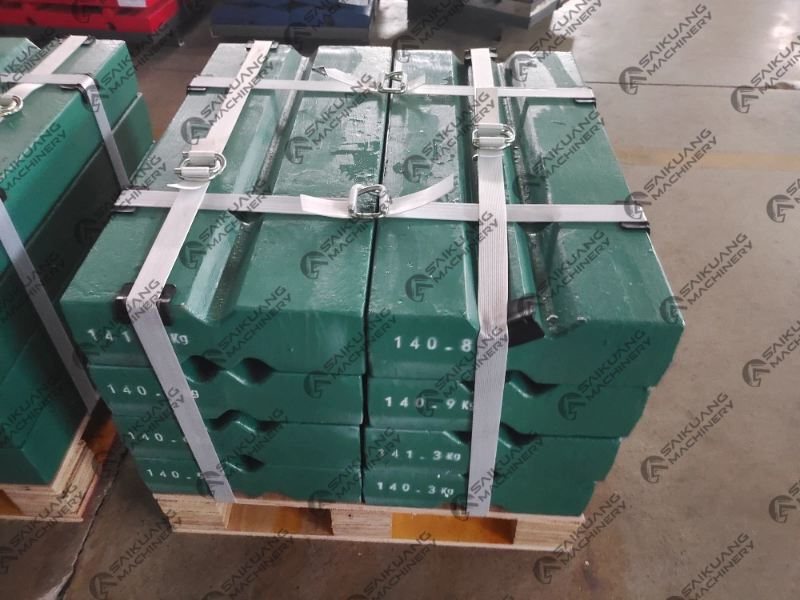
These are the most important consumables. Fixed on the rotor, they deliver the first impact to the stone. They take heavy shock and sliding abrasion. Wrong material leads to fast wear or sudden breakage. Common materials: high‑chrome iron, manganese steel, martensitic steel, and ceramic‑composite (MMC). -
Impact Plates / Breaker Plates
These stationary plates receive the rock after the blow bars hit it, for secondary crushing. You can adjust the gap to control product size and shape. Wrong dimensions or poor alloy cause uneven wear and unstable gradation. -
Liners
These bolt to the inner walls. They protect the main frame from flying particles and dust. They take less direct impact than blow bars, but if they wear through locally, it can cause expensive frame damage.
Material for Blow Bars
Material selection is the most critical decision. You need a balance between wear resistance (hardness) and impact toughness. Harder alloys resist abrasion but can crack under big shocks; tougher grades survive impacts but wear faster on abrasive stone.
| Material | Wear Resistance | Impact Resistance | Best Application |
|---|---|---|---|
| High Chrome | High | Medium | Hard, abrasive rock (granite, basalt) – low risk of tramp metal |
| Manganese Steel | Medium | Very High | Recycling, demolition – feed with rebar or tramp iron |
| MMC (Ceramic Insert) | Very High | High | Mixed feed – maximum life for high‑tonnage plants |
-
High‑chrome iron: Excellent for granite and basalt. Avoid if large metal pieces may enter – it is brittle.
-
Manganese steel (Mn18Cr2): Great toughness for recycling with rebar. Not good for highly abrasive silica rock.
-
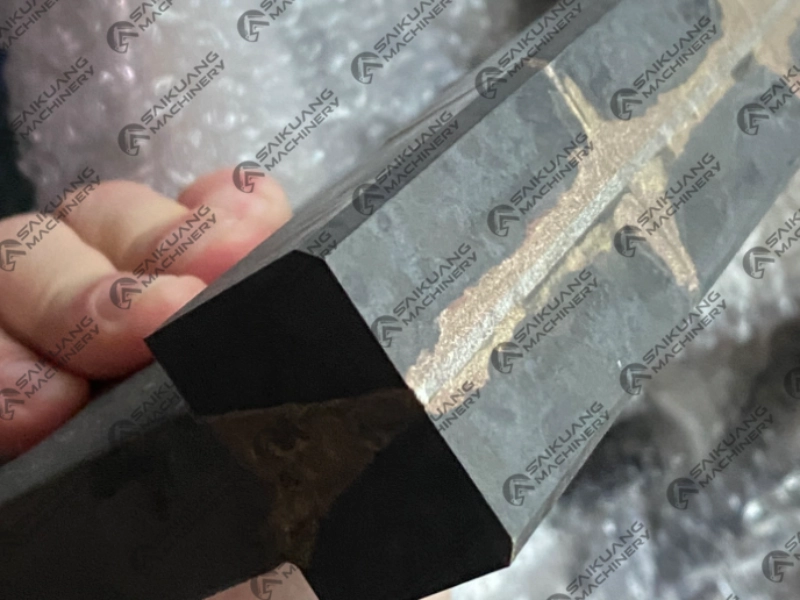
MMC ceramic blow bars: Metal matrix with ceramic inserts – long life and good shock resistance, but higher upfront cost.
How to Select Impact Plates
Impact plates control secondary crushing and final aggregate shape. When choosing them, consider:
-
Match the alloy grade to your feed’s silica content.
-
Confirm plate thickness and profile fit your maximum feed size.
-
Make sure casting dimensions match the original drawing, so gap adjustment works correctly.
Inspect weekly: look for uneven wear, cracks, and loose bolts. If the design allows, flip or rotate plates to use all the wear metal. Also coordinate with liners to maintain stable efficiency.
Match Parts to Your Crushing Application
Hard Rock Quarry & Mining (granite, basalt, quartzite)
Choose high‑chrome blow bars and liners. They reduce replacement frequency and keep cost‑per‑ton stable.
High‑Grade Aggregate Production
Keep chamber geometry consistent. Replace parts before they become rounded or cupped. Good‑profile blow bars and impact plates produce well‑shaped cubical aggregate and reduce oversize return.
Recycling & Demolition
Feed often contains rebar, brick, and concrete. Use manganese or martensitic steel for high impact toughness. For mixed materials, MMC blow bars offer a good balance of wear life and shock resistance.
OEM vs. Aftermarket HSI Crusher Parts
-
OEM parts: Exact fit, stable quality, official warranty. Best if your crusher is still under factory warranty. But they cost more and may have longer lead times.
-
Quality aftermarket parts: Good foundries use reverse engineering and improved alloys. Well‑made aftermarket parts can match or beat OEM performance, at a better price and faster delivery – great for older models.
-
Cheap aftermarket parts: Low price, but alloy often fails spec. Batch quality varies. Only use for short trial runs, not for production.
-
Custom parts: If standard parts don’t work for your special feed, you can order custom alloys or modified profiles to solve local wear problems.
Quality Checklist Before Bulk Purchase
Poor castings may have porosity, micro‑cracks, or uneven hardness – leading to sudden rotor failure. Before ordering large quantities, ask for:
-
Material certificate – Batch‑specific chemical analysis, not a general datasheet.
-
Hardness test – Multiple points across the cross‑section, not just surface.
-
Casting inspection – Ultrasonic or X‑ray to find internal voids and cracks.
-
Heat‑treatment records – Confirm the quenching and tempering process gives the right hardness/toughness balance.
-
Manufacturer verification – Make sure your supplier actually owns a foundry and heat‑treatment equipment. Request photos if needed.
Maintenance Tips to Extend Part Life
Good daily care reduces downtime and cost‑per‑ton:
-
Do a visual check daily – look for loose bolts, cracks, and unusual wear.
-
Replace or rotate blow bars in pairs to keep rotor balance and avoid vibration.
-
Keep feed steady and spread evenly across the rotor width – prevent uneven wear.
-
Remove tramp metal and oversized pieces before they enter the crusher.
-
Flip or rotate impact plates and blow bars when possible to use all the wear metal.
-
Change parts when they have lost about 40‑50% of original weight – don’t run them until total failure.
Frequently Asked Questions
How often should I replace blow bars?
It depends on feed abrasiveness and tonnage. Granite wears bars much faster than limestone. Generally, replace or flip when they lose 40‑50% of original weight.
Which blow bar material is best?
There is no single best. For hard rock, use high chrome. For recycling with rebar, use manganese or martensitic steel. For maximum life in mixed feed, pick MMC ceramic composite.
Are aftermarket HSI Crusher Parts reliable?
Yes, from professional foundries. But check their quality documents and run a trial before bulk buying.
Conclusion
When sourcing HSI crusher parts, don’t decide only by price. Evaluate suppliers based on material certification, heat‑treatment control, casting quality, trial performance, and final cost‑per‑ton.
OEM parts are safe for machines under warranty. For consumable wear parts, qualified aftermarket manufacturers can offer cost‑effective alternatives after proper testing.
If you need reliable HSI Crusher Parts,contact us for technical support and a quote. We support sample trials, single pieces, and bulk orders.
Your Reliable Partner for HSI Crusher Parts
Email: infosk@skpremiumcasting.com
Tel: 0086-17351780508